
Why Your Team Needs You To Be Precise
If you want your team to do bold, creative work, you must take the first risk by giving them clear, precise direction. Here are a few ways to do so.

How To Release Control Of Your Team’s Work
Let your team do what you hired them to do.

Moving From Control To Influence
Your job as a manager is to unleash the brilliance of your team, not to showcase your own.


A Framework For Choosing The Best Idea
Make the decision in a way that everyone can be onboard with.

Navigating Your Team Through Failure
After a failed project, don't just move on. Do this instead.
The Dangers Of Keeping Score
Have you ever felt anxious about your job, but you don’t know why? Maybe it's because you're keeping the wrong score.

Keep Your Leadership Fire Alive
If you lead a team of people, you have the responsibility to keep your flame burning bright and hot.

Are ‘Ghost Rules’ Holding Your Team Back?
Don't allow invisible narratives to limit your team's engagement.

The Two Things That Creative People Need From Every Leader
Why the right mix of Stability and Challenge is essential to brilliant work.
What Does It Take To Produce Brilliant Creative Work?
What does it take for a team to produce consistently brilliant creative work? Just talent? A fun and vibrant culture? Sheer will? Actually, in "create on demand" organizations the answer is often something else. Something surprising.
Finding Your “Sweet Spot”
What could you be better at than anyone around you? It's a question worth exploring.

A Rocket Scientist’s Advice On How To Do Impossible Things
Have you ever been at a cocktail party, had someone ask you what you do for a living, and wished you could come up with something impressive-sounding to wow them? Adam Stelztner probably never experiences that. He's an engineer at the Jet Propulsion Laboratory who has worked on flight missions including Galileo, Cassini, and Mars Pathfinder, and the Mars Exploration Rover project. He has a lot to say about innovation and leadership.

Three Tactics From Getting Things Done That Transformed My Productivity
GTD is a system for organizing and acting on the work that matters most. There are a lot of nuances to the system, and as a result many people get lost in the weeds and intricate details and get off track and stop utilizing it altogether. That's unfortunate, because there are many principles that can be borrowed from GTD and acted upon, even if you don't use the entire system.

Discover What’s Worth Working For, Then Spend Yourself On It
I just spent years researching and writing a book about voice. Voice? Seriously? Why would I do that? Honestly, if I offered you ten potential books to read, and a book about voice was among them, I'd guess that the voice book would probably be among the least...

Why No One Is Listening To Your Great Idea
The ugly truth is that great work isn’t enough. No one tells you this early in your career; It’s something you learn over time. Cream doesn’t automatically rise to the top, and we don’t live in a meritocracy. If you want your idea to be heard, you have to go the extra mile to ensure that it’s framed to resonate with the right audience.

Failure Is Inevitable. What Matters Is How You Deal With It.
After expending so much time, energy, and focus on something you care about, it can be devastating when it just doesn't click. What you do next is very important.
Where You Get Stuck (And What To Do About It)
There are some common "sticking points" that can stall your work's impact. You must push through them to take your work to the next level.

Why Authenticity Is The Key To Making Your Work Resonate
It’s noisy. Not physically noisy, but culturally noisy.
Everyone is clamoring for attention, and clanging their gongs trying to win a few seconds of your precious time. Clickbait, shock tactics, and distractions are so commonplace that they are now used even by previously “credible” institutions. It’s tempting to follow suit and fall into these tactics with your own work. Don't do it.
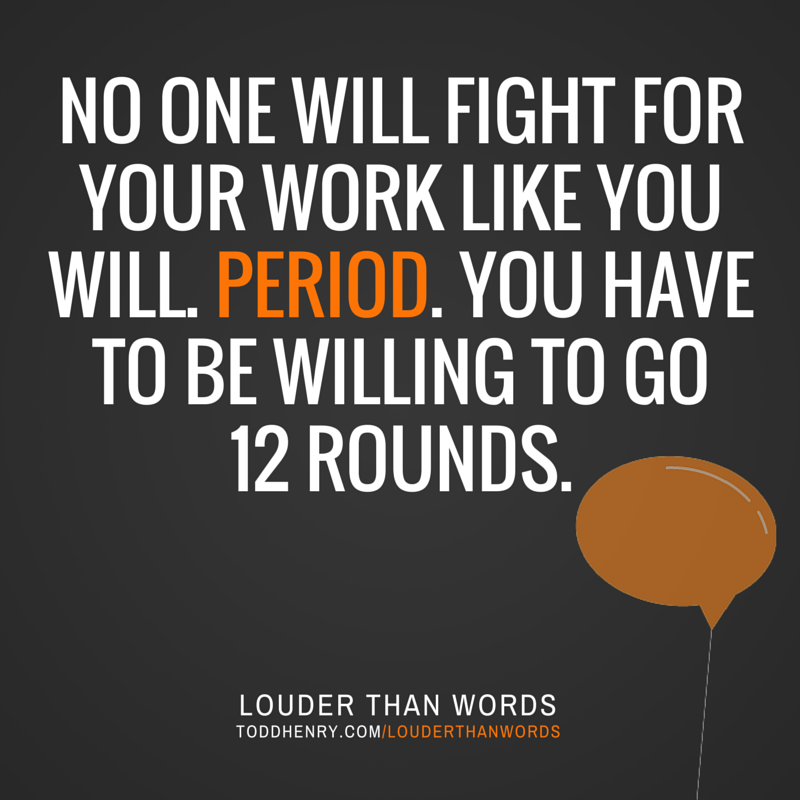
No One Will Fight For Your Work Like You Will
You can't afford to put the fate of your work into someone else's hands. Fight for it and be tenacious. No matter how great the trainer, every boxer has to step into the ring alone.
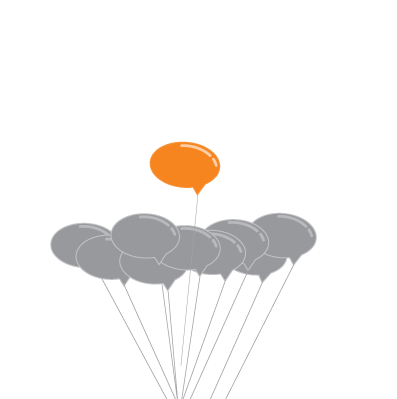
Bravery Is A Discipline, Not A Trait
People who choose bravery know what drives them, and they care more about the outcome than they do about temporary discomfort.
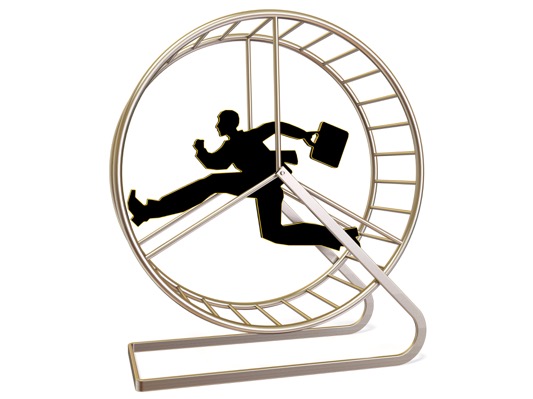
The Tyranny Of The Adequate
There are times when it’s wise to settle for the most reasonable answer, but don’t allow the daily grind to lull you into mediocrity.

Want To Improve Your Odds Of Success? Take More Shots.
Winning is often a game of percentages. Practice and hone your skills through unnecessary creation, follow your instincts for opportunity, and don’t be afraid to take shots and miss.

The Benefits of Keeping a “Commonplace Book”
With the increase of information crossing your attention span each day, it's easy to forget even the most impactful experiences. Make every effort to capture these, and to ensure that they become a valuable part of your creative process.
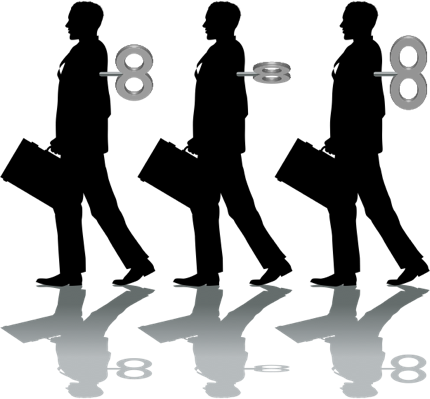
Aim For Influence, Not Control
Controlling behavior never leads to results beyond your own grasp. However, when you are able to achieve influence, you multiply your efforts and reproduce your values and principles in the lives of others.

Feeling Nervous About Your Work? Good!
Stretching always requires that you risk failure, which means you will probably feel a little over your head from time to time. Don’t mistake a little nervousness for weakness. Use it as fuel.

The Power of No
Many people allow their life to become cluttered with passive yes's, not active ones. They are living with a decision they made months or years ago, and are not making the effort to re-visit whether it's still the right decision. Sometimes you have to say "no" in order to re-focus your efforts.

Brilliance Demands Bravery
If you make things and share them, your heart will at some point be broken. If you never share, it will harden. Your choice.

Good Leaders Are Willing To Change Their Mind
One of the more concerning dynamics of the “everything is on the record all the time” world is that changing your mind - especially in a highly public way - has become Sin #1.
The Value Of Connectional Intelligence
Last week, I had the chance to chat with Erica Dhawan, who is co-author of the new book Get Big Things Done. The book is about the age of connectedness, and how we can now accomplish things previously unattainable if we leverage "connectional intelligence".

Mick Jagger And The Uncertainty Of Creative Success
Don't believe the lie that success is inevitable. On the inside, where all of the risk is being taken, it often feels like things could fall apart at any moment, and that's precisely how it should be.
Are You Stealing From Yourself?
Don’t rob yourself, and stop trying to will yourself to do better. Instead, recognize that small actions of focus and discipline today is the best way to love your future self. Make investments today so that you can reap a return tomorrow.

Don’t Settle For The First Idea
In the effort to "ship fast" we often fail to lay a sturdy foundation for our work, and the results can be disastrous. Shipping early shouldn't be equivalent to thoughtlessness. You need to ensure that you are respecting the work by giving it your best mental effort.

Why Does Criticism Sting?
It’s often not the circumstances we learn from, but our response to them. Identifying limiting narratives or patterns of self-destruction can help us spot them when they crop up, then nip them before they cause us to implode or obsess needlessly over critique.

A Simple Question That Will Keep You Inspired
If you want to remain productive, and you want to have ideas when you need them most, then the kinds of stimuli you allow into your mind are important. Because creativity is essentially the combining of existing pieces of inspiration in your environment into something new, the quality and relevance of inputs will often directly affect your creative output, thus either propelling you forward or impeding your progress.

Use Time Chunks To Master Distraction
Many of us lack the kind of latitude over our schedule that we’d like to have, but all of us have some discretion about how we spend our time. The best way to prevent distractions and make steady progress on your most important work is to dedicate predictable time to it.

How To Receive Negative Feedback
There's no delicate way to say this: many of us carry weapons. Not literal weapons (most likely), but figurative ones, and we get trigger happy the moment we experience something we don't like.

Run Your Race, Not Someone Else’s
Run YOUR race. Execute YOUR plan. Do YOUR work, not someone else's. Don't allow envy, spite, ego, or greed to derail you or cause you to chase a phantom ideal that was never meant for you.

Why You Must Invest (Time) In Yourself
Anything of value that you wish to create will require a significant investment of time. Brilliant work is expensive.